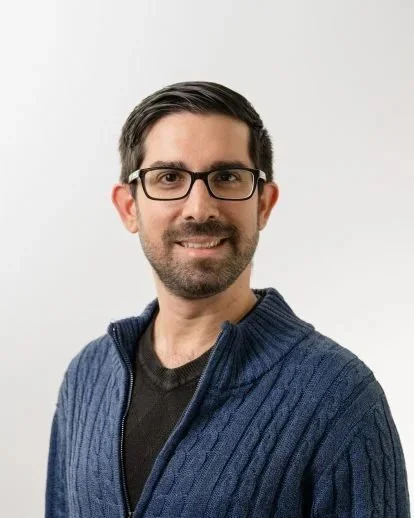
Roberto L. Abreu, PHD
FOUNDER and principal investigator
I [he/him; the/them; él/elle], am an Associate Professor of Counseling Psychology at the University of Florida (UF) and the director of the Collective Healing and Empowering VoicEs through Research and Engagement (¡Chévere!) Lab, and an Affiliate Faculty in the Center for Latin American Studies and the Department of Gender, Sexualities, and Women’s Studies. I graduated from the University of Kentucky (UK) with a PhD in Counseling Psychology and completed his internship at the Federal Medical Center, Lexington. I obtained my masters in Counselor Education, Clinical Mental Health Track from Florida International University (FIU).
My research examines: (1) the relational and systemic factors that shape mental health outcomes among Latinx LGBTQ people, their families, and communities and (2) the experiences of trans youth and their families, including the structural and interpersonal barriers they encounter when seeking affirming care. I have authored more than 110 peer-reviewed articles and book chapters and have co-edited two books, LGBTQ+ Affirmative Psychological Interventions: A Latine/x Perspective and Affirming LGBTQ+ Students in Higher Education. At its core, my work is guided by counseling psychology values such as social justice, person-environment interactions, growth, resilience, and resistance. See main areas of my research under the “Research” tab.
I serve as a Multiple Principal Investigator (MPI) and Co-Investigator (Co-I) on several nationally funded grants, including MPI on a National Institutes of Health (NIH) R01 grant focused on Latinx LGBTQ youth and their families. My research extends beyond traditional academic research. An important aspect of my research includes partnerships with community organizations, healthcare systems, and community leaders to conduct community-driven research that directly informs interventions and local, state, and national policies. For example, I serve as Co-Investigator on an NIH-funded community initiative that focuses on health disparities that affect LGBTQ+ communities in South Florida. Through collaborative partnerships that elevate community priorities, this work seeks to address inequities in healthcare access.
In addition to community-engaged research, I am frequently invited by the American Psychological Association (APA) to serve as a content expert in the preparation of amicus briefs submitted to the Supreme Court of the United States on LGBTQ+ related cases. These cases include United States v. Skrmetti, which challenged Tennessee’s ban on gender-affirming healthcare for minors; Little v. Hecox, a case concerning bans on transgender women and girls competing on female athletic teams in public schools and universities; and Chiles v. Salazar, which examined whether state-level bans on conversion therapy for minors violate the First Amendment rights of mental health professionals.
Finally, I serve as Associate Editor for multiple academic journals, including Psychology of Sexual Orientation and Gender Diversity (PSOGD), Cultural Diversity & Ethnic Minority Psychology (CDEMP), Journal of Prevention and Health Promotion (JPHP), and Youth & Society (YAS).
At its core, my work is guided by counseling psychology values such as social justice, person-environment interactions, growth, resilience, and resistance. A significant portion of his research uses advanced qualitative methodologies to explore the experiences of marginalized communities for which existing measures do not accurately capture their experiences. I have had the privilege of being mentored by Queer, Latinx, Black, and other POC (specifically womxn-identified) scholars, clinicians, and advocates who have shaped how I interact with research, mentoring, and teaching. They have modeled for me the power of culture, collectivism, healing, and cultural humility.